
The Swift Unravelling of Mark T.'s Cloned Card Scheme in 72 Hours
A Tampa Bay resident withdrew $4,200 from cloned debit cards before an ATM camera recorded his face. Fifteen days later, he faced federal charges and a five-year prison sentence.
A comprehensive resource for ex…- Published
- Updated
- October 15, 2026
- 11 min read
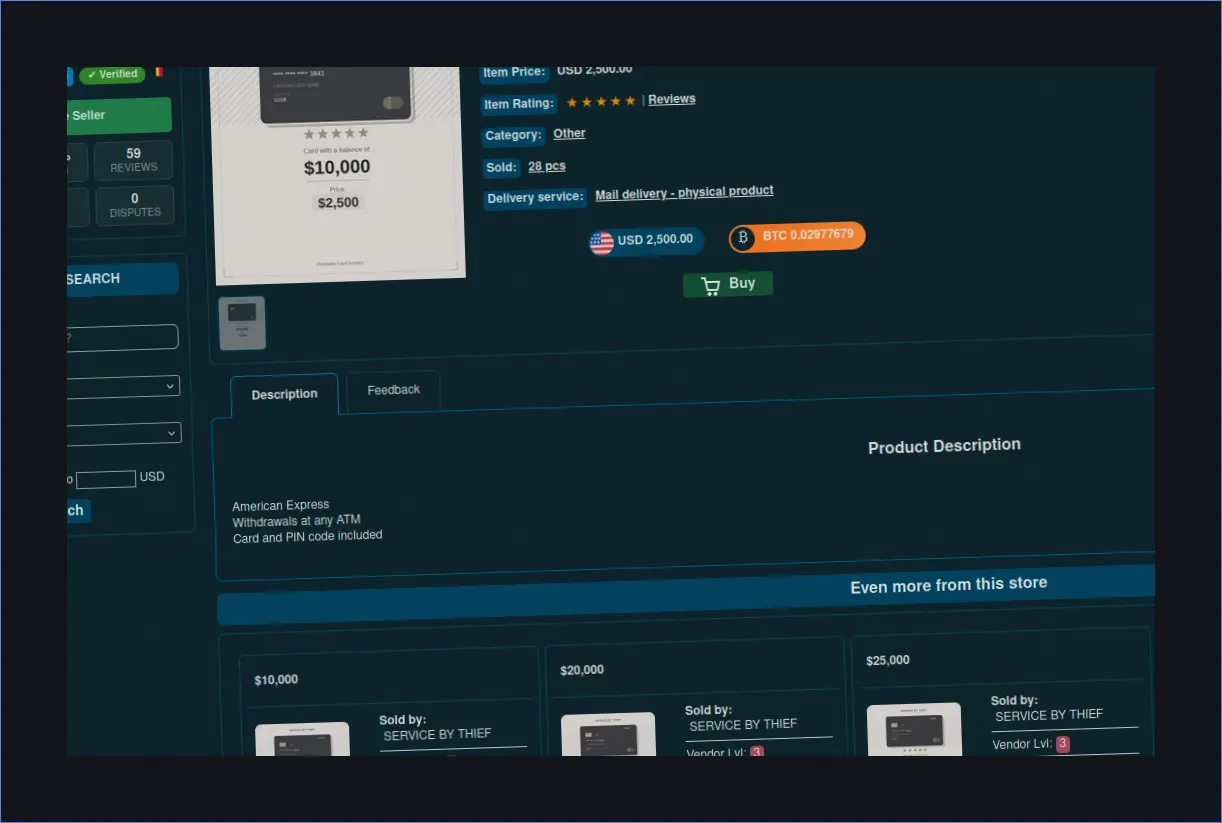
At 34 years of age, Mark T. believed he had found an easy method for making money. In November 2024, six cloned debit cards were acquired by him for $480 in cryptocurrency from a darknet site. These cards held stolen magnetic data from real accounts, a frequent problem within the illegal carding sector. He withdrew a total of $4,200 from three ATMs prior to being apprehended at a fourth.
This case illustrates how rapidly anonymity can disappear, often in under 72 hours. The investigation revealed that CCTV footage was much more effective than traditional methods. A digital trace linked back to a cryptocurrency wallet eventually led law enforcement to the U.S. Secret Service. Consequently, he received a 60-month sentence in federal prison.
This case exemplifies the complex dynamics involved in modern financial fraud investigations. It underscores the relationship between physical security measures and online privacy. Even covert actions can leave a noticeable mark.
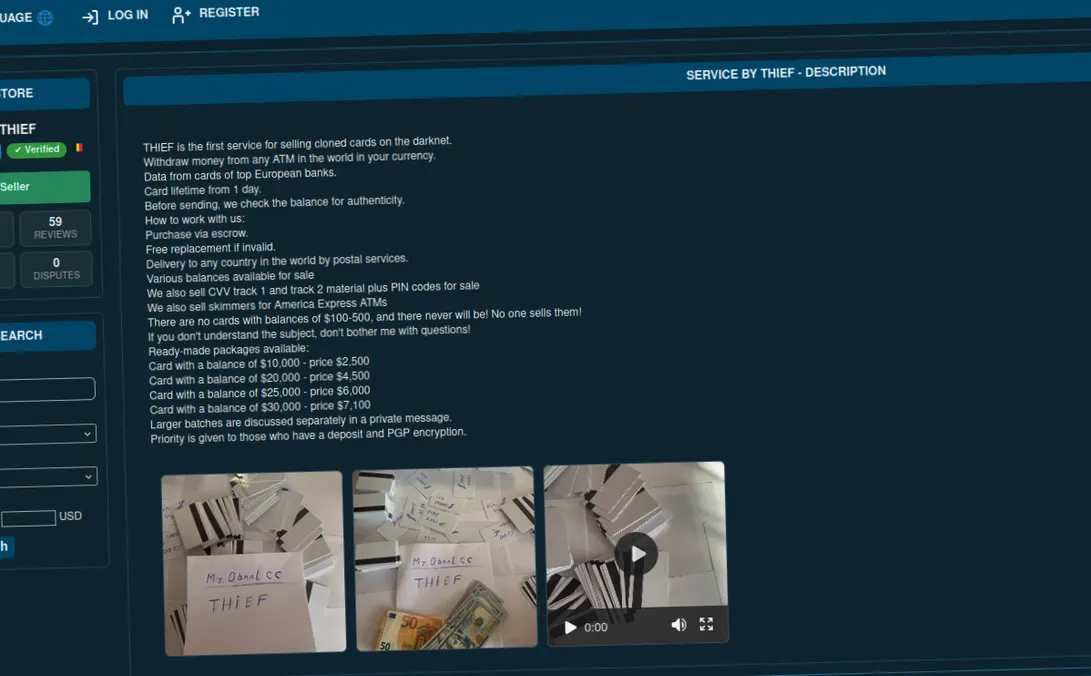
The website where the purchase was made promised discretion, yet the transaction left traces at every stage.
1. The Carding Supply Chain
Carding functions as a long-standing method within the realm of cybercrime. The approach utilised by Mark adhered to recognised patterns.
Data Acquisition Through Skimming
Criminals gather magnetic stripe data using various techniques. ATMs equipped with skimming devices collect track 1 and track 2 details. Shimmer devices inserted into card readers produce analogous results. Phishing attacks are employed to electronically harvest credentials. Data breaches at retail establishments yield extensive data dumps. Darknet platforms aggregate these datasets for resale. Examining ATM surfaces for loose parts is crucial for recognising potential skimmers. A specialised detector can pick up Bluetooth signals from wireless devices. Visual inspection remains the foremost strategy for skimmer prevention.
Card Production and Distribution
Data obtained through illicit means is encoded onto blank plastic cards employing magnetic stripe encoders. Embossing machines create raised numbers and names on these cards. Expiry dates are aligned with the stolen data. When PIN codes are also captured via overlay devices or concealed cameras, buyers receive effective tools for cash withdrawal. Preventing card skimming relies on identifying these overlay devices prior to PIN entry. Analysing images of ATM skimmers aids in recognising common overlay patterns. Evaluation of the card reader helps indicate a skimmer's presence by looking for misaligned components or abnormal thicknesses.
The Cash-Out Process
Buyers withdraw funds rapidly, often before victims recognise the fraudulent activity. Speed is critical: banks suspend cards once fraud alerts are issued. Criminals exchange cash for cryptocurrency through Bitcoin ATMs. Peer-to-peer exchanges offer alternative laundering methods. Mark opted for Monero due to its anonymity features. The cards were delivered in plain packaging. Everything functioned correctly. However, ATMs record more than just cash; they also capture evidence.
2. Surveillance Architecture Inside ATMs
Modern ATMs function as advanced surveillance tools. Each cash transaction generates a comprehensive record.
Camera Systems
Cameras are strategically placed to capture the facial features of users. The newest models provide a resolution of 1080. They are equipped with infrared technology for recording in low-light settings. Many machines also feature extra cameras to capture multiple angles. These concealed cameras are not visible from the outside. Mark approached the fourth ATM openly, showing no intention to hide his identity. His face was clearly visible without any disguise. The video recording lasted 23 seconds, offering ample footage for identification.
Logging Transactions and Locations
Every transaction generates a log entry that captures a timestamp. These logs include details such as the card number, the withdrawn amount, the ATM ID, and the transaction status. Additionally, each entry contains geolocation data. Network metadata also monitors interactions with processing systems. Banks collect these logs from their ATM networks. Anti-fraud algorithms analyze this data in real-time to spot suspicious patterns. If multiple transactions occur in a close geographic area, it triggers immediate alerts. Alarms were raised by Mark's withdrawals, as they occurred in close proximity to his residence, specifically within a 40-mile radius. This clustering was swiftly identified by monitoring systems.
Criminals may think anonymity on the darknet protects them in reality. However, ATMs demonstrate a crucial point where online crimes have tangible repercussions.
3. Investigation Timeline and Methods
The investigation progressed in a structured manner, with evidence being collected without delay.
Initial Detection and Action
Day 1 (November 2024): Reports of unauthorised withdrawals originated from Florida, Georgia, and North Carolina. The banks acted quickly by blocking the affected cards and activating alerts in their fraud detection systems.
Day 3: The fraud detection algorithms flagged suspicious activities related to cloned cards. Numerous withdrawals were documented across different states in a short timeframe. This unusual pattern prompted an urgent alert and the case was escalated to investigative teams.
Day 5: The financial institutions escalated the investigation to the U.S. Secret Service, which is tasked with addressing financial crimes. Analysts sought transaction logs and video footage from all pertinent ATMs.
Identification and Evidence Collection
On Day 8, a clear image of a suspect emerged from video footage captured at an ATM. The driver's licence database of the Florida Department of Public Safety was cross-referenced with this image, leading to the identification of Mark T., who possessed no previous criminal record. It was confirmed through analysis that withdrawals took place within a radius of 40 miles from his residence.
Day 12: Investigators secured a warrant to inspect electronic records. Logs from the internet service provider indicated connections to Tor exit nodes during the fraudulent activities. Court orders linked Mark’s Monero wallet to a darknet account, verifying his identity.
At Mark's residence on Day 14, six blank plastic cards, a magnetic stripe reader/writer, and a laptop indicating visits to darknet marketplaces were discovered during the execution of a search warrant. The amounts withdrawn from the ATMs matched the $3,200 in cash that was discovered.
Day 15: Mark was taken into custody. During interrogation, he admitted to acquiring the cloned cards and withdrawing money from four ATMs. Before he could use them, the other two cards were blocked.
4. Financial and Legal Consequences
This brief criminal venture resulted in severe legal consequences.
| What Got Tracked | The Numbers |
|---|---|
| How many ATM hits | 4 |
| Money pulled from machines | $4,900 |
| Fines plus payback | $22,000 |
| Time until caught (days) | 15 |
| Fake cards bought | $480 |
| Jail time (federal) | 5 years (60 months) |
| Probation after prison | 3 years |
Mark conducted four transactions, withdrawing a total of $4,900. He acquired the six cards for $480. The entire scheme spanned 15 days until his arrest. The resulting federal prison term was 60 months, and the financial obligations amounted to $22,000 in fines and restitution. Following his release, he is required to undergo three years of supervision.
5. Why Cryptocurrency Anonymity Failed
Monero is structured to ensure transaction confidentiality. However, the chain of investigations linked back to Mark.
The KYC Vulnerability
Mark acquired Monero via a centralised exchange that mandated identity verification. He provided his passport and a selfie. Following court orders, the exchange disclosed his identity and transaction details. Although later Monero transfers are difficult to trace, this initial purchase established an identity anchor. The date and amount of the transaction served as circumstantial evidence.
Intersecting Streams of Evidence
The inquiry interconnected various timelines. The activities, including Monero acquisition, marketplace transaction, card receipt, and ATM withdrawals, transpired within a fortnight. This alignment in time reinforced the circumstantial evidence. Physical proof obtained during the search offered direct validation. The confiscated cards retained magnetic stripe information that matched data from victims' thefts. Video footage provided conclusive identification. No cryptocurrency can negate a face visible on camera. Even flawless digital operational security would have faltered against such definitive evidence.
6. Critical Operational Failures
Mark's errors led to various investigative avenues. Each misstep magnified the others.
Geographical Clustering
Four ATMs were located 40 miles from his home. Such closeness triggers immediate alerts from anti-fraud systems. Had he distributed the withdrawals over a wider area, it might have delayed the detection of suspicious activities. Nevertheless, being near his registered address hastened the identification process once facial recognition matched his driver's license photo.
Lack of Disguise
Mark did not wear any facial coverings, glasses, or hats that could obscure his identity. The cameras on the ATMs captured clear images for identification purposes. A comparison with the driver's licence database was completed within seconds. Discussions on platforms like Reddit frequently highlight this weakness. The issue of identifying a card skimmer becomes moot when the user is clearly identifiable.
Central Cryptocurrency Acquisition
Mark used a KYC exchange to buy Monero, thus linking his identity to the transaction history. Alternatives like peer-to-peer exchanges or Bitcoin ATMs that accept cash avoid identity checks. His choice prioritised convenience over security, establishing an initial thread of evidence.
Collection of Physical Evidence
The search at his residence revealed cards, an MSR encoder, and a laptop. Digital footprints remain even after deletion: the Tor Browser leaves behind forensic traces. Logs of the operating system track application usage, and file metadata persists even after files are erased. The $3,200 in cash matched the denominations issued by the ATM, bolstering the overall case.
Condensed Timeline
Completing all transactions within a fortnight initiated rapid detection by algorithms. Spreading the activities over several months could have postponed alerts from anti-fraud systems. Eventually, camera footage would have revealed his identity. The speed of his actions amplified all other errors.
7. Implications for Security Practitioners
Mark's situation illustrates the functioning of integrated security systems in real life. Several key lessons arise for security professionals.
Performance of Anti-Fraud Mechanisms
The automated systems employed by banks established the initial layer of detection. These systems worked independently, activating prior to any human involvement. Investment in machine learning models for anomaly identification is essential. Such systems significantly enhance the speed at which detections occur. Discussions surrounding carding on dark web forums frequently underestimate the effectiveness of these algorithms.
Merging Physical and Digital Evidence
Video footage from ATMs provided vital identification data. Without accurate transaction logs, this visual evidence would have been contextually limited. Investigators required precise timestamps to isolate relevant moments in the footage. The successful integration of physical surveillance with digital transaction records is crucial. Relying on just one of these data streams would not have been adequate.
Traceability of Cryptocurrency
The anonymity features of Monero did not hinder the identification process. The entry point at a KYC exchange and the cash withdrawal point delineate the anonymous segments in between. As long as regulated exchanges mandate verification, complete anonymity is unfeasible. Discussions on Reddit about cloned cards often neglect this weakness. Technical expertise in CF card cloning cannot mitigate identity exposure during cryptocurrency purchases.
Speed of Victim Response
Victims were slow to recognise the fraudulent activities on their accounts. Prompt reporting can facilitate quicker card deactivation. Shortened withdrawal periods can curtail criminal gains. Educational programmes offered by banks can directly reduce the impact of fraud. Awareness campaigns regarding card skimming protection and skimming prevention devices enhance technological safeguards. Educating customers about credit card skimming protection empowers them to act as the initial detection layer.
8. Sentencing and Judicial Reasoning
Mark T. entered a guilty plea in March 2025. In March 2025, Mark T. faced charges related to fraud involving access devices as stipulated by 18 U.S.C. § 1029 and also money laundering under 18 U.S.C. § 1957.
The U.S. District Court for the Middle District of Florida imposed a sentence of 60 months in prison. After serving his time, Mark will be under supervised release for three years. Additionally, he is required to pay $22,000, which includes fines and restitution owed to three victims affected by his actions. The judge emphasized that while Mark was involved in the fraudulent scheme, he was not the one who orchestrated it. This detail is important as it can significantly affect the penalties assigned to those involved. In contrast, individuals who lead such operations may manage to avoid being caught for extended periods. This persistent problem creates major challenges for law enforcement agencies.
The Unbridgeable Gap
Mark T.'s situation exemplifies the intersection of conventional monitoring and digital investigation techniques. Surveillance from ATMs turned a nameless darknet transaction into a case suitable for prosecution. While cryptocurrency offered temporary concealment, it could not eliminate tangible proof. The timeline for the investigation spanned 15 days, from the initial withdrawal to Mark's arrest.
For experts in security, this case underlines critical lessons. Automated fraud detection systems can identify trends more swiftly than human analysts. There is a necessity for a cohesive integration of both physical and digital evidence. Educating customers is essential to minimise fraud incidents by promoting prompt reporting. Methods of anonymous payment often falter when identity verification is mandatory at both ends.
The carding industry persists on darknet marketplaces. Buyers believe that technological anonymity lowers their risks. Nevertheless, each cash withdrawal leaves behind physical traces. Every surveillance camera captures identifying information. Mark's experience revealed a gap of 23 seconds—the length of a single ATM video recording.
Sources
- 1. Beware of ATM, Debit and Credit Card ‘Skimming’ Schemes | FDIC.gov
- 2. Credit Card and Debit Card Fraud | OCC
- 3. Public Advisory ATM & Point-of-Sale Skimming
- 4. Credit Card Skimming | Georgia Attorney General's Consumer Protection Division
- 5. Card Skimmers - Florida Department of Agriculture & Consumer Services
Explore more
Exploring Dark Web Gore: What to Expect
Explore dark web gore content, its implications, and where to find it safely. Understand the risks involved in accessing this disturbing ma…

Torch Onion Link: A Guide to Using It
Discover how to access and use the Torch onion link for searching .onion sites safely and effectively on the dark web.

Onion Dark Web: Understanding Its Significance
Explore the onion dark web to understand its structure, uses, and legitimate significance beyond criminal activities.

Navigating the Onions Site: A Beginner's Guide
Discover how to safely navigate onion sites with essential tips and tools for beginners. Learn what to expect while browsing the dark web.